Root causes in Birmingham
The University of Birmingham is a bustling hub of activity within type 1 diabetes research, with multiple Grand Challenge funded researchers working there. I spoke with two researchers who are part of the Root Causes pathway, which is looking to understand exactly how the immune attack that causes type 1 diabetes begins and develops over time. This knowledge could lead to more effective treatments that prevent or slow down the immune attack that causes type 1 diabetes.
Exploring if the timing of treatment matters
First, I spoke with Dr. James Pearson, who is investigating whether the timing of treatment could make a difference in protecting beta cells. In type 1 diabetes (T1D), immune cells called Tregs, which usually help stop beta cells being destroyed, do not work as they should. Dr Pearson is researching whether a treatment called IL-2 (a natural protein—specifically a type of signalling molecule called a cytokine—that acts as a major control switch for the body’s immune system) may be more effective at different times of day, and why this might be the case.
We discussed how his project is progressing, what his current research is telling him, and how collaboration with other Grand Challenge researchers is helping accelerate research.
“We have found that a lot of proteins are changed on the surface of Tregs (beta cell bodyguard cells) that may be linked to changes in how they work and how they may respond to therapy.”
“The Grand Challenge has allowed us to use new techniques to answer questions, enabled us to work with new researchers and translate our work to better improve the potential impact it may have on people living with T1D.”
Dr. Pearson’s work is highly specific, but the question behind it is simple: could timing make a treatment work better? If it can, it could help researchers design smarter ways to protect beta cells, using the body’s own immune regulation more effectively.
Are multiple treatments better than one?
Just down the hall was Dr. Danijela Tatovic, another of our Root Causes researchers. She is investigating whether the drug, abatacept, works better at protecting beta cells on its own or boosted with IL-2 (the same treatment Dr. Pearson is researching).
Dr. Tatovic is the first Grand Challenge researcher to progress to clinical trials. The speed at which she has been able to reach this stage shows how the Grand Challenge can help accelerate research.
Dr. Tatovic and Dr. Pearson are currently working together, sharing results which may help both of their research projects. What struck me about this was how naturally ideas were being exchanged between researchers working on different aspects of type 1 diabetes.
Beta cell therapies in Edinburgh
The next stage of the visit took me to Edinburgh, where Grand Challenge-funded research is focusing on one of the biggest questions in type 1 diabetes: how to protect replacement beta cells so they can survive after transplant.
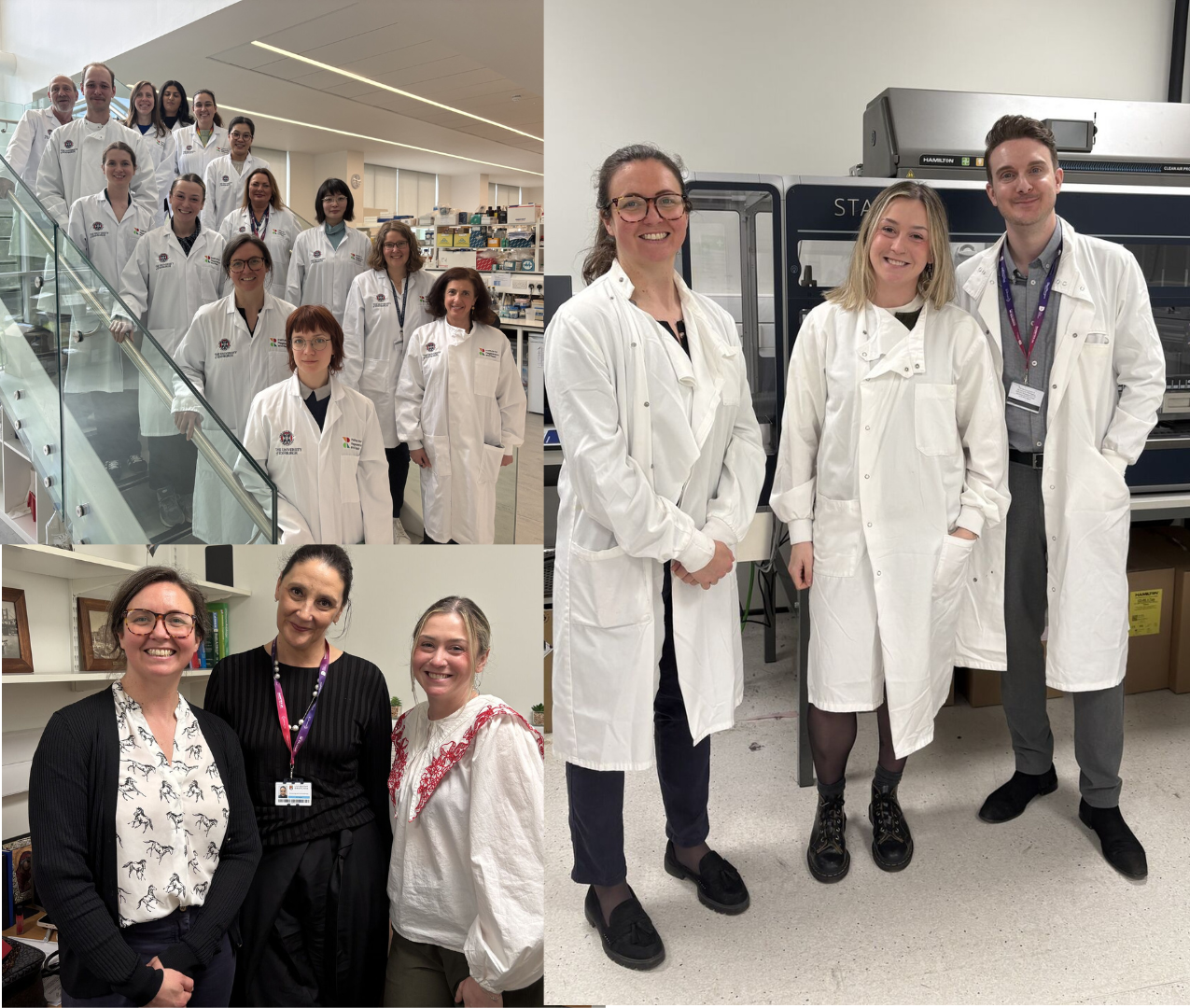
Stepping into the research centre, it was immediately obvious why the University of Edinburgh is another institution leading the charge in type 1 diabetes research. The scale of the facilities and expertise under one roof was impressive. We met with Dr Shareen Forbes and her research team, where she gave a presentation on her work and why Edinburgh is such an important place for type 1 diabetes research.
Unleashing the benefit of beta cell transplants
One option for a cure for type 1 diabetes is something called an islet transplant.
These involve transplanting clusters of cells, called islets, from a donor pancreas into the liver of someone with type 1 diabetes.
Islet transplants can restore a person’s own insulin production, often for several years. However, donor islets are limited, their quality varies, and people often need more than one transplant as the benefits fade over time. People who receive these transplants also need to take anti-rejection drugs to prevent their bodies rejecting the donor cells, which can bring serious side-effects. Meaning we need hopeful solutions to tackle these challenges.
Dr. Forbes and Dr. Lisa White are looking to package tiny spheres called microparticles with specific drugs inside to better protect the beta cells during the transplant process. The team will test different combinations of drugs and run experiments to scale up the dose of the drugs, to see which dosage works best.
If successful, this approach could reduce the need for anti-rejection drugs, make transplants available to more people, and eventually improve transplants of lab-grown beta cells, bringing the prospect of a long-term treatment or cure closer to reality.
Speaking with Dr Forbes and her team, I was struck by how practical their approach was, focusing not only on replacing beta cells, but also ensuring those cells can survive and thrive after transplantation.
“Funding has enabled me to build a talented team around me and collaborate widely across fields, allowing us to carry out some really exciting research that brings us closer to a cure for type 1 diabetes, while also developing new ways to support and improve the lives of people living with the condition.”
A sense of excitement
As I travelled home, what stayed with me most was the shared sense of purpose. Before setting off, I expected to hear about exciting science. What I hadn’t expected was just how connected the research community has become. Across every lab I visited, researchers were sharing ideas, challenging each other’s thinking and working together. Although these teams are tackling very different scientific questions, they are all working towards the same goal: a future where people no longer have type 1 diabetes.